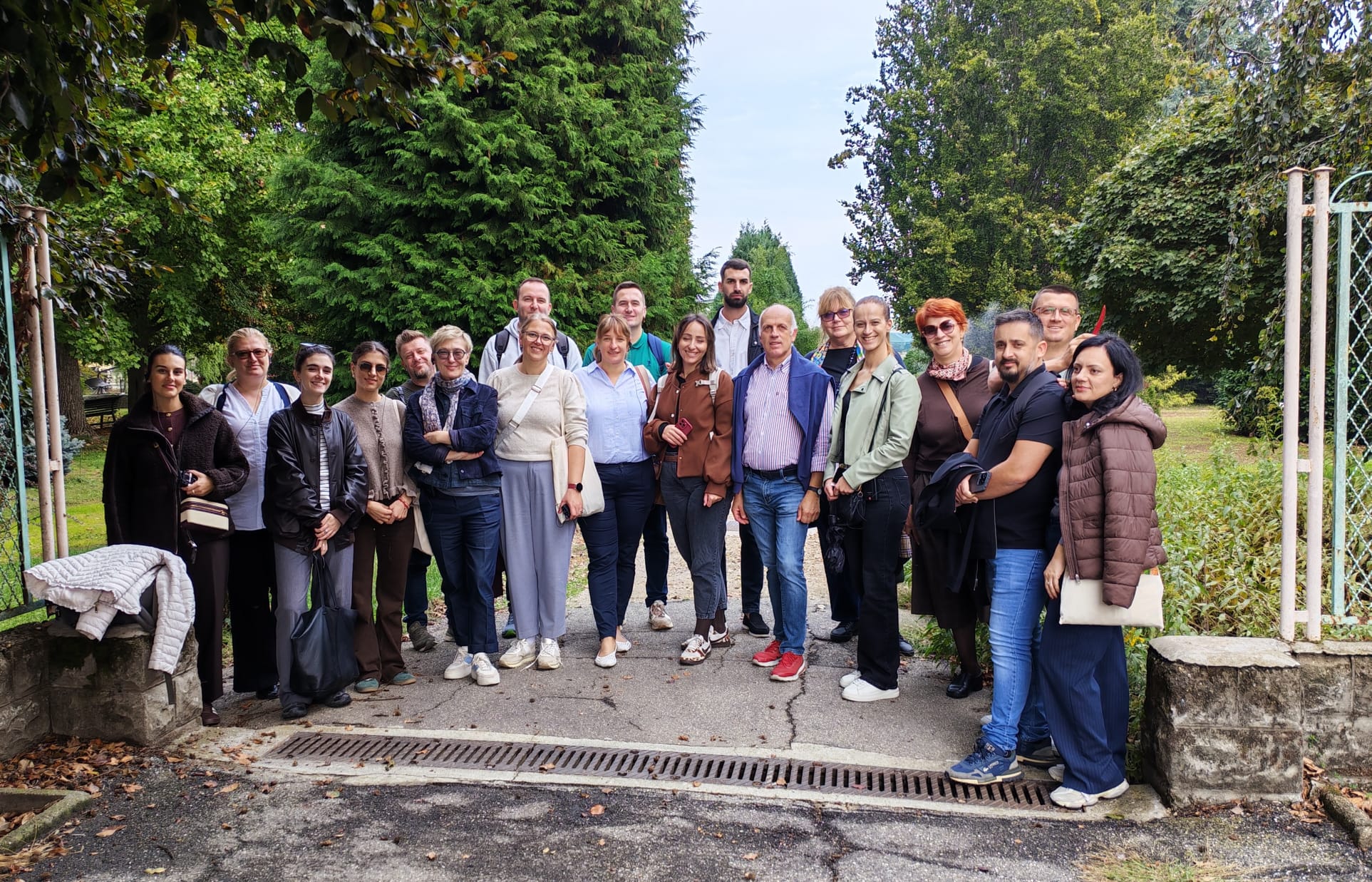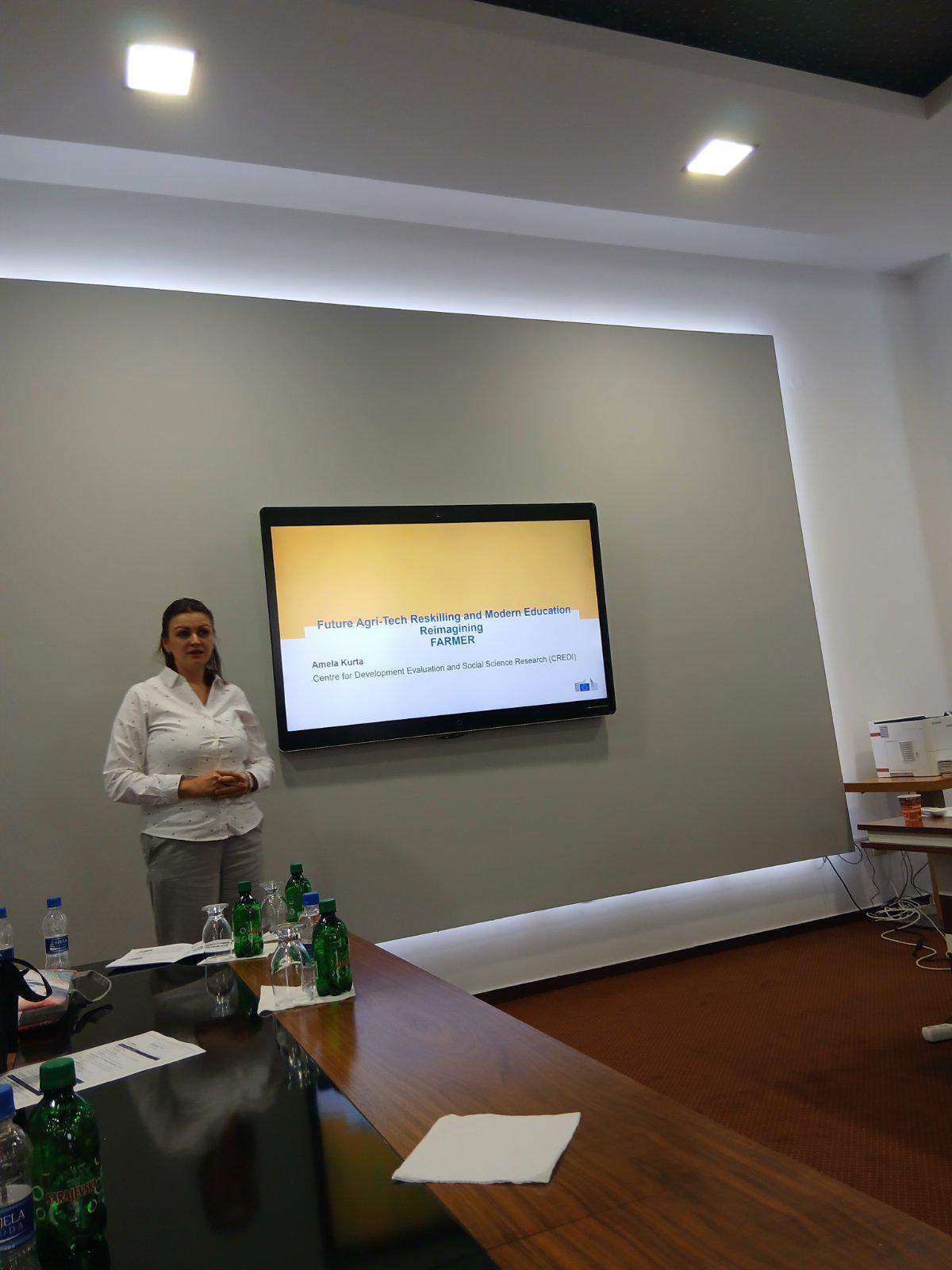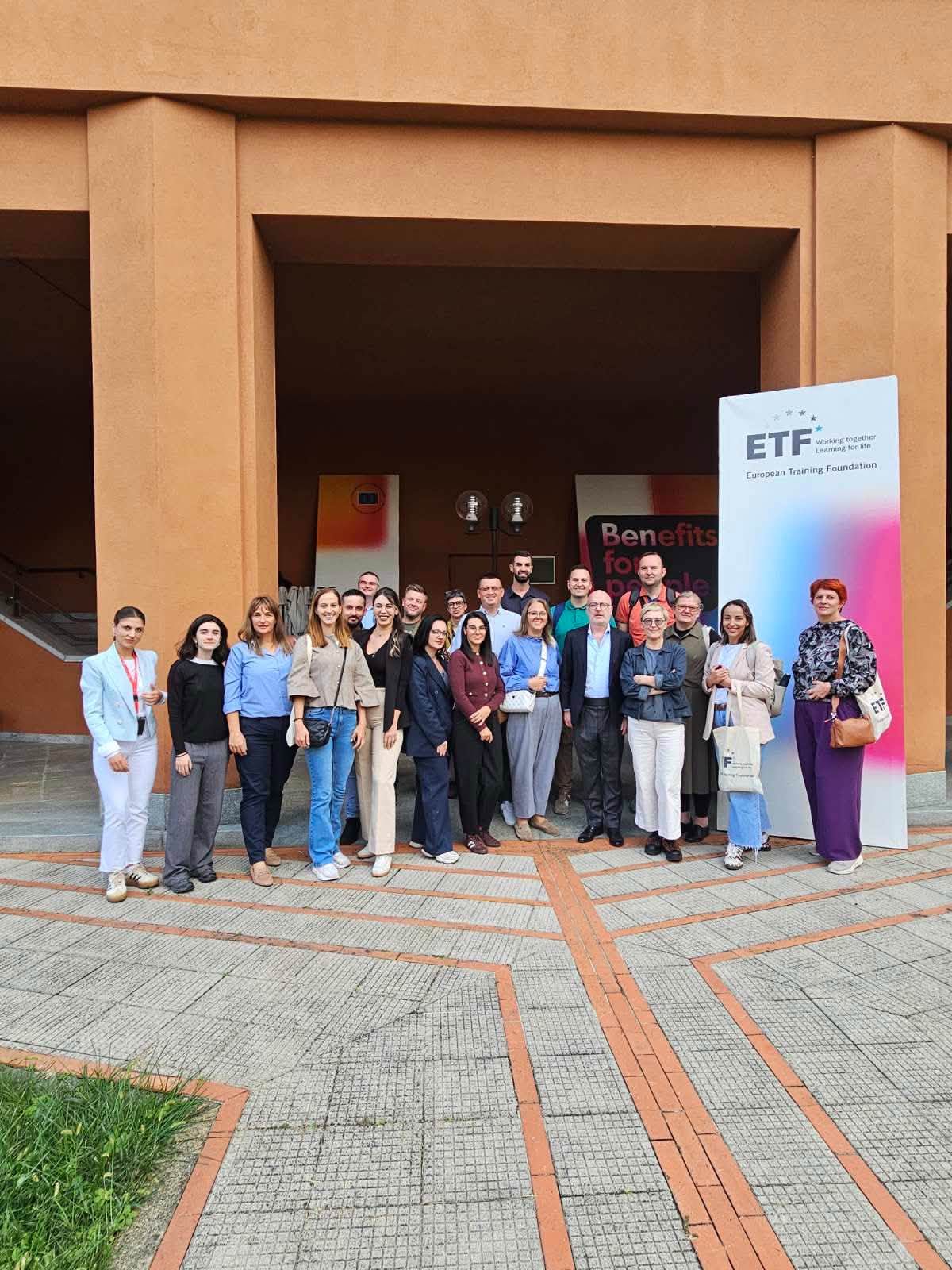
The Erasmus+ project FARMER – Future Agri-Tech Reskilling and Modern Education Reimagining organised a study visit to Turin and the Piedmont region in Italy from 5 to 10 October 2026, with the learning programme taking place from 5 to 9 October. Organised by Fondazione Giacomo Brodolini (FGB), the project coordinator, in cooperation with FARMER partners, the mobility connected vocational education and training (VET) stakeholders from the Western Balkans with Italian examples in Piedmont of agricultural education, practical training and cooperation with employers.
The visit was designed for VET teachers from JU Mješovita srednja škola “Enver Pozderović” Goražde (Bosnia and Herzegovina) and JU Srednja mješovita škola Golubovci (Montenegro), as well as representatives of companies and start-ups from the two countries. Its main objective was to support the adaptation of agricultural and agri-food curricula to changing skills needs, with a focus on digital and green competences, practical learning and stronger connections between schools and local innovation ecosystems. The programme formed part of FARMER’s wider efforts to improve the responsiveness of VET systems in the Western Balkans.
Connecting Innovation, Skills Policy and Agricultural Education (6 October 2026)
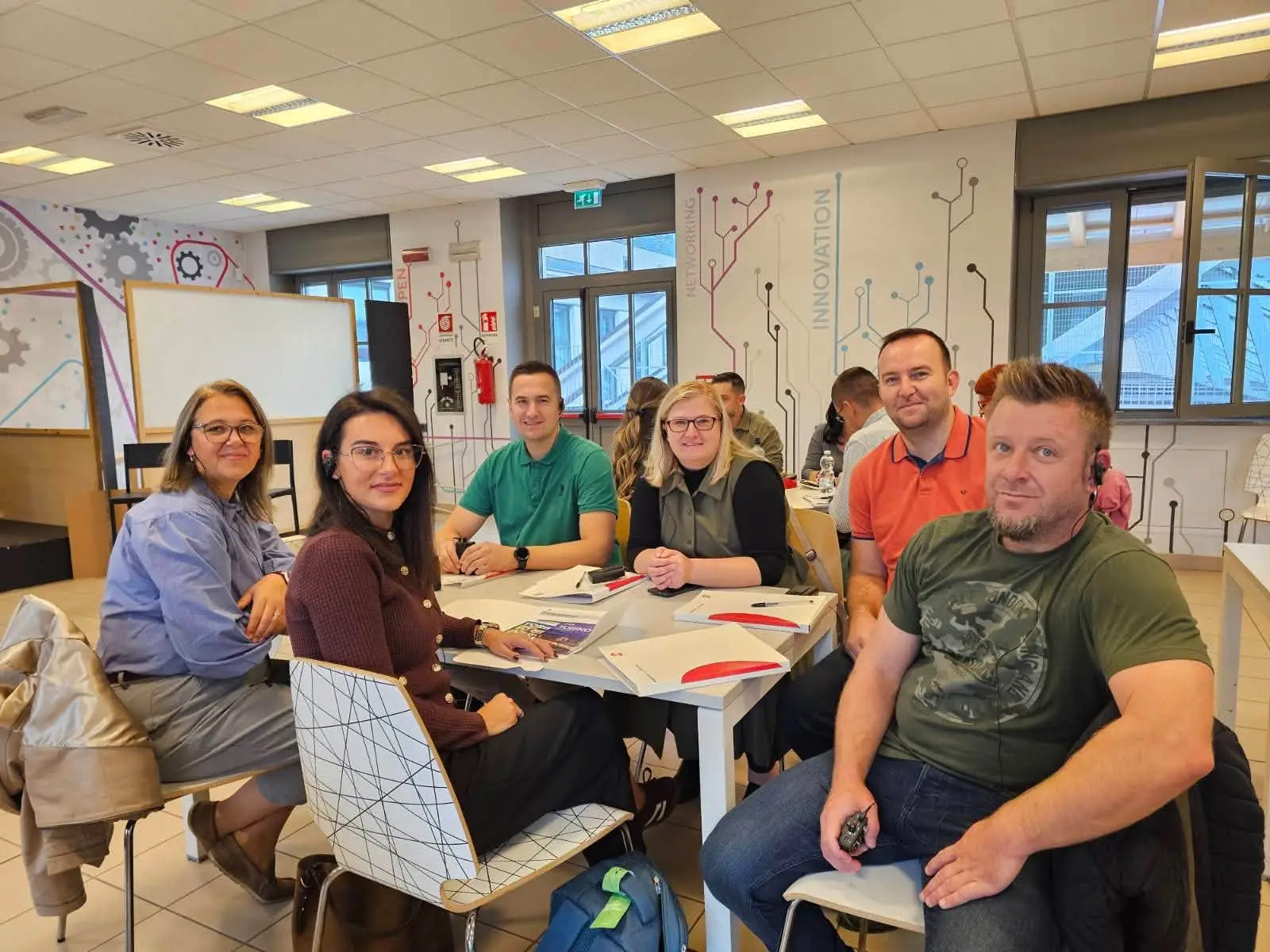
The learning programme began at Open Incet – Innovation Center Torino, whose mission is to foster collaboration and experimentation, helping innovative ideas and technologies move towards practical application and sustainable economic and social impact. The centre provides a collaborative innovation environment where education, entrepreneurship and business can meet, making it particularly relevant to FARMER’s focus on translating emerging technologies and skills needs into practical learning and stronger VET–enterprise cooperation.
The opening programme provided an overview of Piedmont’s agri-food and agri-tech VET ecosystem and brought participants together to explore shared challenges in agricultural education. The Design Thinking approach presented by FGB offered a structured framework for examining these challenges collaboratively.
Panacea Social Farmprovided an additional example of the links between sustainable agri-food practices, short supply chains and inclusive employment. Its presentation showcased how the cooperative combines artisan bakery production with social objectives, broadening the discussion of how education can connect with the local food economy.
A visit to the European Training Foundation (ETF) included sessions on current VET and skills policies in the Western Balkans, ETF’s work in the agri-food sector, and European funding and Erasmus+ opportunities. Cristina Mereuta, Pirita Vuorinen and Gordon Purvis contributed as speakers.
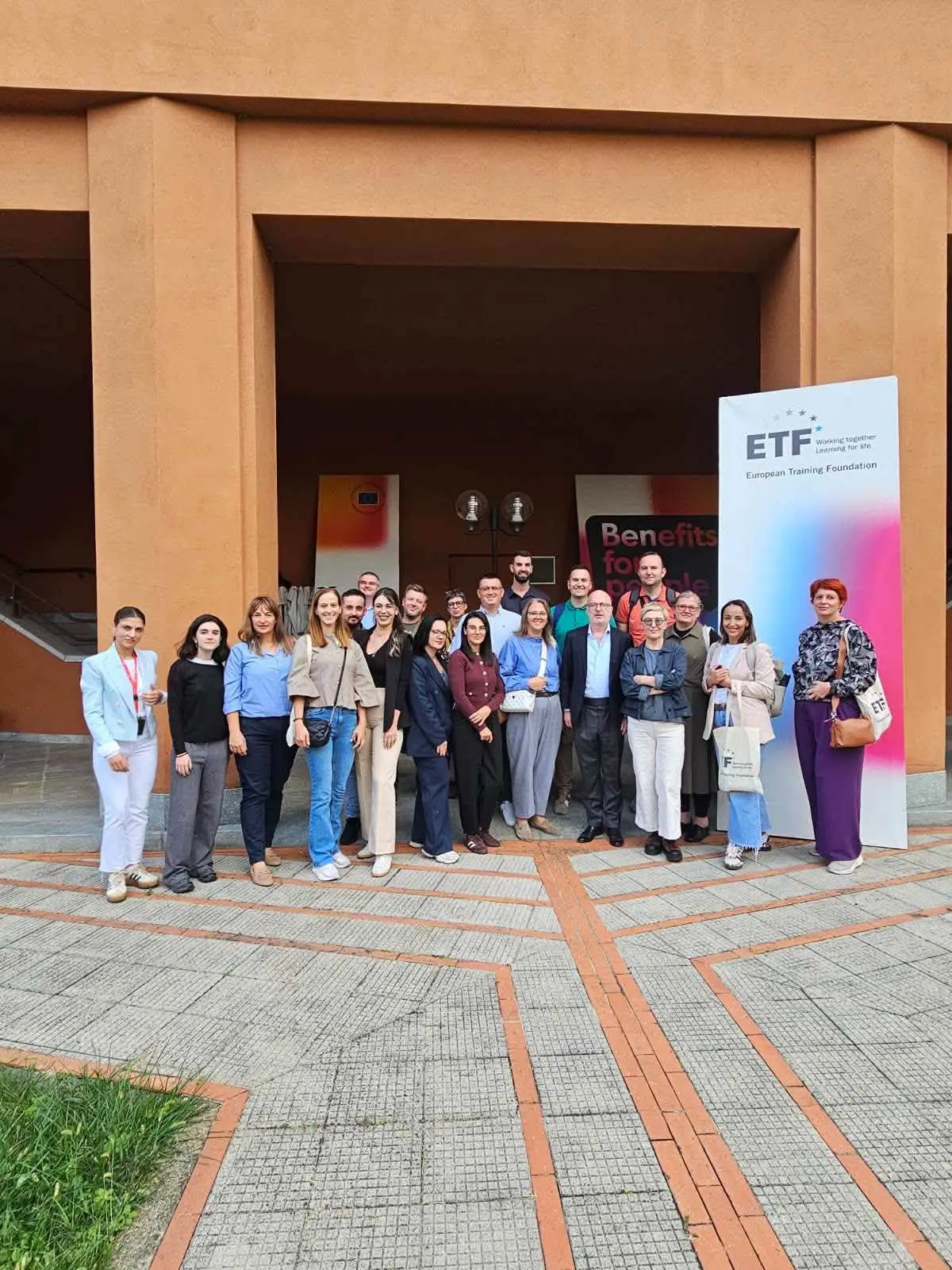
The sessions connected FARMER’s curriculum development activities with wider regional policy priorities and opportunities for European cooperation. Together with the opening activities at Open Incet, the ETF visit provided institutional and policy context for the subsequent visits to agricultural education and training institutions.
Bonafous: Shared Infrastructure for Learning and Applied Research (7 October 2026)
The programme continued at the Bonafous Agricultural Institutein Chieri, located approximately 20 km southeast of Turin. The Bonafous Institute is an agricultural education and training complex that brings together vocational education, agricultural production, applied research and environmental sustainability. The campus provided an opportunity to examine how practical learning, technical education and research can reinforce one another.
Rather than functioning solely as an agricultural school, Bonafous operates as a working agricultural campus where education and production are closely integrated. Its estate covers approximately 35 hectares and accommodates several educational and research institutions, including:
- ENGIM Piemonte – Bonafous Chieri, an accredited vocational training centre.
- Istituto B. Vittone (IIS Vittone), which provides upper-secondary vocational education in agriculture and environmental services.
- The University of Turin’s Experimental Winery, supporting research and experimentation.
- Agricultural facilities operated in cooperation with the City of Turin.
This arrangement enables different educational institutions to share facilities and connect learning with agricultural practice.
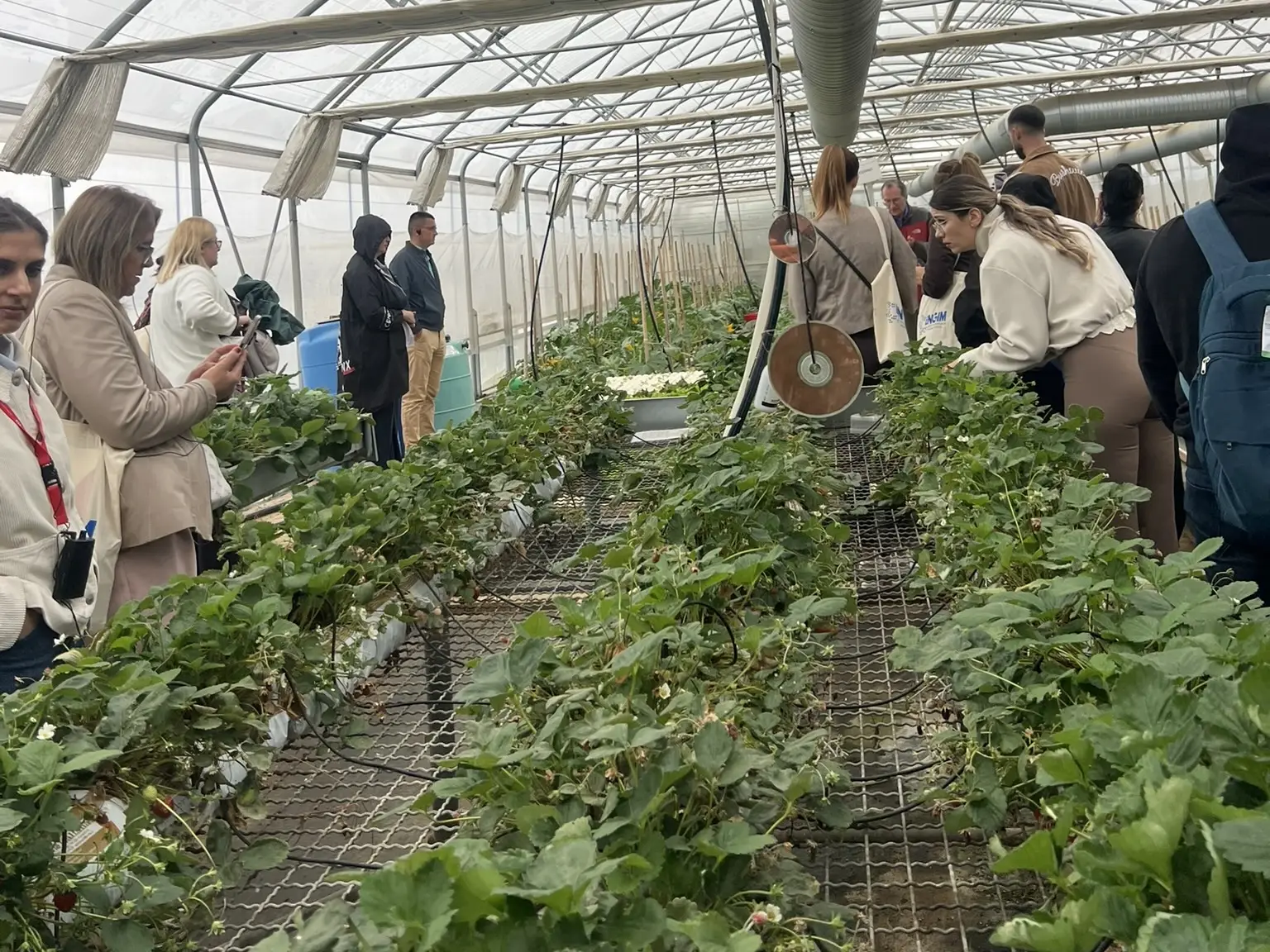
The programme placed particular emphasis on ENGIM’s hands-on vocational pathways and work-based learning opportunities for green-economy and agri-food professions. ENGIM Bonafous provides vocational training in horticulture, fruit production, landscaping, agricultural activities and food-related occupations. Its educational model combines practical training with internships and work placements. It also offers continuing training and reskilling programmes tailored to the needs of companies and local communities. An important feature is its inclusive approach, which provides training and pathways into employment for people with disabilities and other disadvantaged groups.
At IIS Vittone, the focus was on technical agricultural programmes, laboratories and digital farming tools. These examples demonstrated how digital competences can be developed through practical agricultural tasks, using equipment and learning environments that connect classroom teaching with workplace needs.
The Experimental Winery added an applied research dimension to the programme. Its work includes oenological research, micro-vinification and the certification of new clones, alongside cooperation with IIS Vittone and ENGIM. For FARMER, this model provides a useful reference for exploring how schools can collaborate with universities and specialist institutions to access expertise and facilities beyond their own resources.
Overall, Bonafous illustrates how an agricultural VET institution can develop into a practical learning ecosystem rather than functioning solely as a provider of classroom instruction. The transferable lesson is not necessarily to reproduce its extensive infrastructure, but to explore how Western Balkan schools could adapt selected elements, such as small-scale automated greenhouses, production-based learning or shared training facilities, to their own resources and curricula.
Lombriasco: Learning through Production and Enterprise Partnerships(8 October 2026)
On its journey, the group visited the Salesian Agricultural Institute of Lombriasco, an agricultural technical school near Turin that combines formal education, a working agricultural enterprise, applied experimentation and professional training. Founded in 1894, the institution has a long tradition of agricultural education. Today, its approach combines traditional farming knowledge with modern agricultural technologies and sustainability, with the programme focusing on cooperation with employers and the integration of agricultural production into vocational education.
The institute operates its own agricultural enterprise on approximately 12 hectares of land, which functions simultaneously as a commercial farm and a teaching facility. The enterprise combines crop production, livestock farming, agricultural experimentation and direct sales to consumers. Students are therefore exposed to the operational realities of farming, including production decisions, resource management, agricultural machinery and commercial activities. Experimental activities, such as testing crop varieties and agricultural practices, further connect learning with innovation. The institute further integrates digital technologies and sustainable agriculture through practical facilities and specialised learning activities. Particularly relevant examples include:
- Aquaponics:An aquaponic greenhouse enables students to explore alternative production systems and resource-efficient cultivation.
- Precision agriculture:Educational activities include precision farming, agricultural drones and Web GIS applications.
- Agricultural machinery:Students learn to operate and manage equipment used in modern farming.
- Sustainable crop production:Experimental fields support learning about crop varieties, biodiversity and reduced agricultural inputs.
- Agricultural biodiversity:The institute participates in projects focused on conserving traditional crop varieties and promoting environmentally sustainable agricultural practices.
- Together, these activities create opportunities to develop digital, environmental and technical competences within agricultural education.
The institute presented a model in which partnerships with enterprises support practical training, access to equipment and the continuing relevance of curricula. Lombriasco also offers professional training and continuing education for agricultural workers and adults. Training areas include agricultural machinery operation, horticulture, pruning, plant protection and other technical qualifications. This positions the institute as a provider of both initial vocational education and lifelong learning, responding to the changing needs of the agricultural workforce.
Moreover, Lombriasco is involved in agricultural experimentation and innovation projects. Its agricultural enterprise cooperates with the University of Turin, the Piedmont Region and specialised research organisations. The school often participates in European cooperation and Erasmus+ mobility initiatives.
ITS Academy: Advanced Agri-Food Skills Shaped by Industry Needs(9 October 2026)
The final working day included a scheduled visit to ITS Agroalimentare Academy Piemonte, a post-secondary technical academy offering two-year professional programmes in the agri-food sector. Its educational model is designed to bridge the gap between technical education and the skills needs of companies. The programme focused on specialised agri-food training that combines classroom learning with extensive practical and work-based training, supported by the involvement of businesses and industry professionals. This part of the programme was intended to broaden the discussion beyond upper-secondary education and examine pathways towards advanced vocational specialisation.
Particularly relevant to FARMER is the Academy’s focus on food innovation, digital technologies, sustainability, production processes and quality management. Companies are involved not only as internship providers but also in shaping training programmes around emerging occupational and technological needs.
Conclusion: From Study Visit To Local Practice
Bonafous, Lombriasco and ITS Agroalimentare Academy Piemonte offered three complementary perspectives on agricultural vocational education. Bonafous highlighted shared infrastructure and institutional cooperation; Lombriasco demonstrated how agricultural production can underpin teaching; and the Academy provided a reference for higher vocational specialisation shaped by industry needs. Together, these models offer five lessons for the Western Balkan VET schools participating in FARMER.
First, organise learning around real production challenges. School farms and local agricultural enterprises can connect classroom knowledge with production, processing and farm management. Learning across these activities helps students understand agricultural processes as a whole while strengthening employer cooperation and opportunities for work placements.
Second, integrate technical, digital and green competences. Activities such as automated greenhouse management bring together digital tools, agricultural knowledge, resource efficiency and sustainable practices. FARMER’s 30-hour learning modules provide an opportunity to develop these competences through practical tasks.
Third, involve enterprises in curriculum development. The Academy’s model highlights how companies can contribute beyond providing internships, helping identify emerging skills needs and shape learning content. For FARMER, this means translating employer consultations into learning outcomes and activities addressing food innovation, production processes, digital technologies, sustainability and quality management.
Fourth, strengthen partnerships and progression opportunities. Cooperation with agricultural advisers, universities, research organisations, public institutions and specialised training providers can expand access to facilities and expertise. The Academy also broadens the perspective beyond upper-secondary education, encouraging schools to consider how foundational competences can support progression towards advanced vocational specialisation.
Fifth, adapt innovation to available resources. Schools can select practices suited to their capacities: reorganising teaching around existing production activities, sharing facilities or introducing small-scale digital applications where they meet a clear learning need.
For FARMER, the next step is to translate these lessons into feasible curriculum choices: identify a relevant production challenge, define the competences students need, agree on partners’ contributions and test the approach through the planned learning modules. This will connect the study visit to teaching practice and provide evidence for further adaptation.
Next Steps
A follow-up online session is scheduled for 22 October 2026 to review the key insights from the visit, identify the most relevant practices for each participating school and agree on concrete next steps. The session will provide an opportunity to translate the learning programme into priorities for curriculum adaptation and further cooperation with employers and other partners.
The study visit supports FARMER’s central objective of helping vocational schools respond proactively to technological and environmental changes in the agri-food sector.
The next step is to connect the examples explored in Piedmont with evidence gathered through local stakeholder consultations and the curriculum development work already underway in the Western Balkans.
Funded by the European Union. Views and opinions expressed are, however, those of the author(s) only and do not necessarily reflect those of the European Union or EACEA. Neither the European Union nor EACEA can be held responsible for them.