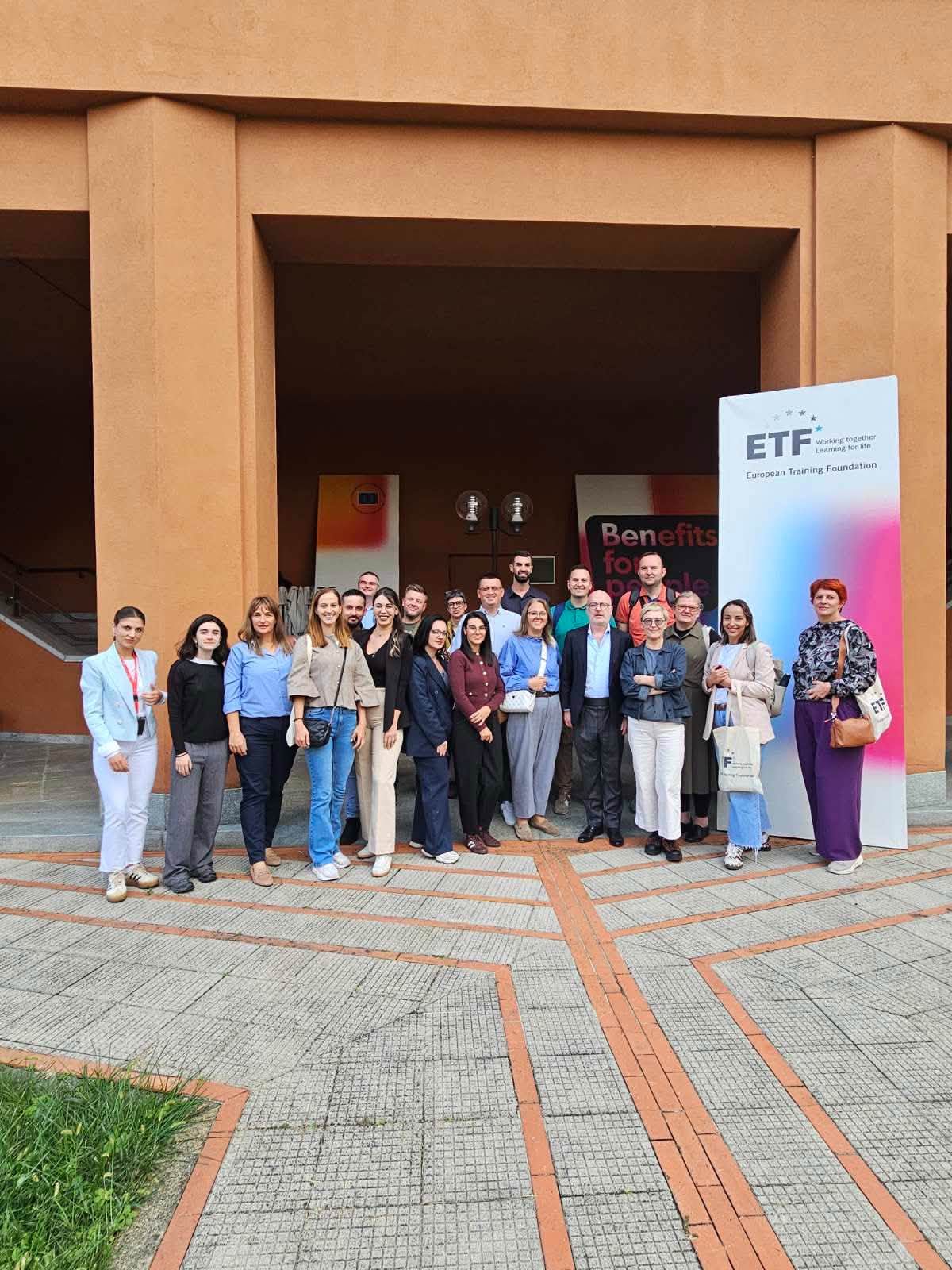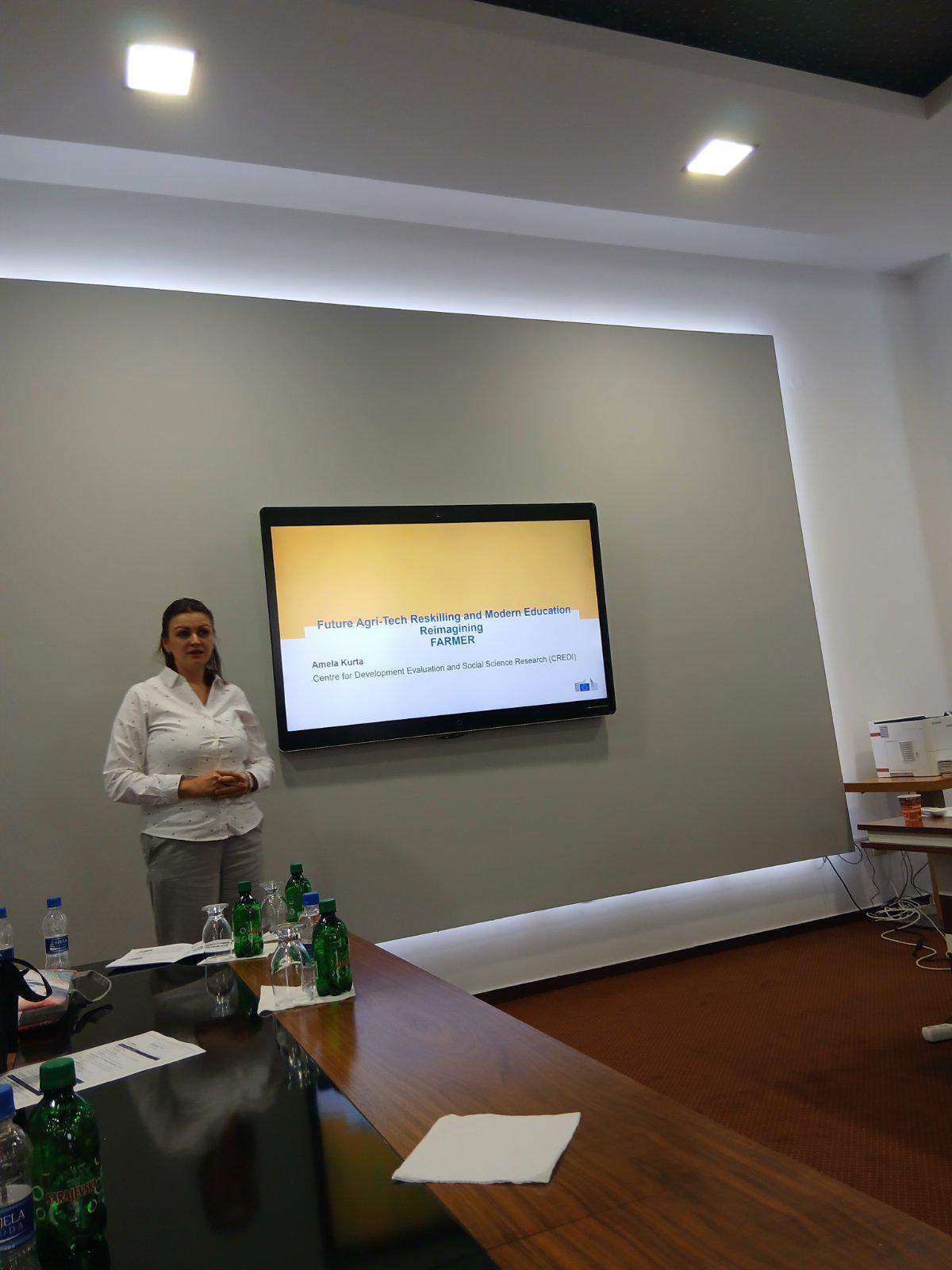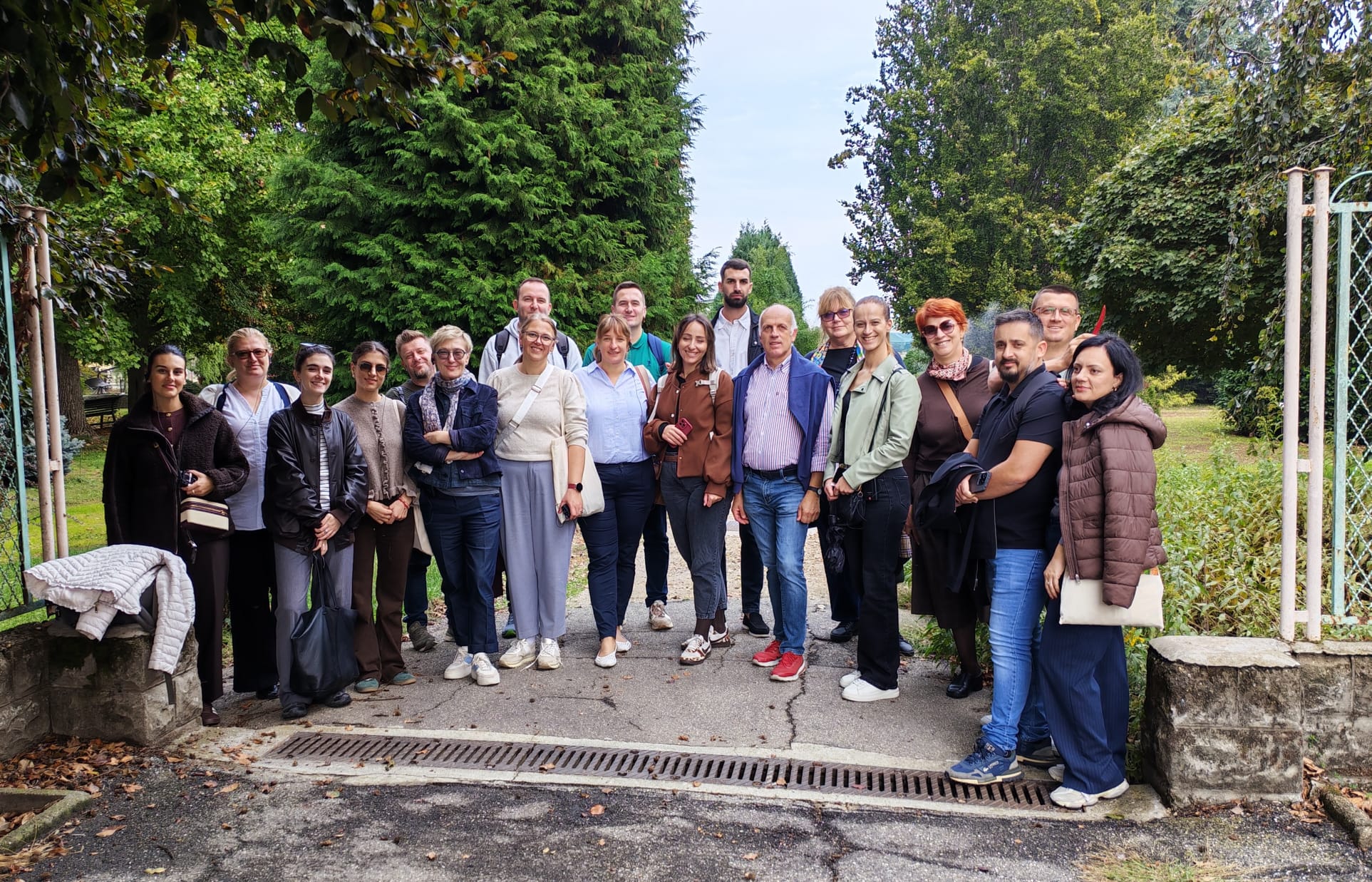
How can vocational education keep pace with technological change, sustainability challenges and the evolving needs of the agricultural sector? This question was at the heart of the FARMER study visit to Turin, Italy, where vocational education and training (VET) stakeholders from the Western Balkans explored practical approaches to connecting education, innovation and agricultural production.
Organised from 5 to 10 October 2026 by Fondazione Giacomo Brodolini (FGB), in cooperation with FARMER project partners, the study visit brought together teachers from JU Mješovita srednja škola “Enver Pozderović” Goražde in Bosnia and Herzegovina and JU Srednja mješovita škola Golubovci in Montenegro, alongside representatives of companies and start-ups from both countries.
The mobility formed part of the Erasmus+ project FARMER – Future Agri-Tech Reskilling and Modern Education Reimagining, which aims to strengthen the capacity of VET providers in the Western Balkans to respond to emerging skills needs in the agri-food sector.
Through visits to innovation centres, European institutions and agricultural education providers in the Piedmont region, participants explored different models of practical learning, employer cooperation and curriculum innovation, with particular attention to digital and green competences.
Connecting education, innovation and European cooperation
The learning programme began at Open Incet – Innovation Center Torino, an innovation hub bringing together education, entrepreneurship and business.
Participants were introduced to Piedmont’s agri-food and agri-tech VET ecosystem and explored shared challenges in agricultural education through a Design Thinking approach presented by FGB.
The programme also featured Panacea Social Farm, a cooperative combining sustainable food production, short supply chains and inclusive employment. Its experience demonstrated how agricultural and food-related activities can create both economic and social value.
The visit highlighted the importance of connecting VET institutions with wider innovation ecosystems, enabling new ideas and technologies to be translated into practical learning opportunities.
At the European Training Foundation (ETF), discussions shifted towards the broader policy context. Sessions addressed VET and skills development in the Western Balkans, ETF initiatives in the agri-food sector, and opportunities for European funding and Erasmus+ cooperation.
Together, these exchanges provided a foundation for examining how successful educational practices could be adapted to the needs of FARMER partner schools.
Bonafous: Learning through shared infrastructure and applied research
At the Bonafous Agricultural Institute in Chieri, participants explored an educational ecosystem where vocational training, agricultural production and applied research operate alongside one another.
Located on a 35-hectare estate near Turin, Bonafous brings together several institutions, including ENGIM Piemonte – Bonafous Chieri, Istituto B. Vittone (IIS Vittone) and the University of Turin’s Experimental Winery.
This shared environment enables students to connect classroom learning with agricultural practice while benefiting from specialised facilities, technical expertise and research activities.
ENGIM’s training programmes combine hands-on learning with internships and work placements in fields such as horticulture, fruit production and landscaping. The institution also provides continuing training and employment pathways for disadvantaged groups.
At IIS Vittone, the focus was on technical agricultural education and digital farming tools, while the Experimental Winery illustrated the contribution of applied research to vocational learning.
The key takeaway for FARMER was that effective practical education does not depend solely on the resources of an individual school. Partnerships between training providers, universities and public institutions can expand access to equipment, expertise and learning opportunities.
For VET schools in the Western Balkans, this could mean exploring smaller-scale solutions, such as automated greenhouses, shared training facilities and production-based learning activities, adapted to their existing resources.
Lombriasco: Turning a working farm into a classroom
The visit to the Salesian Agricultural Institute of Lombriasco on 8 October offered a complementary perspective: How can an agricultural enterprise become an integral part of vocational education?
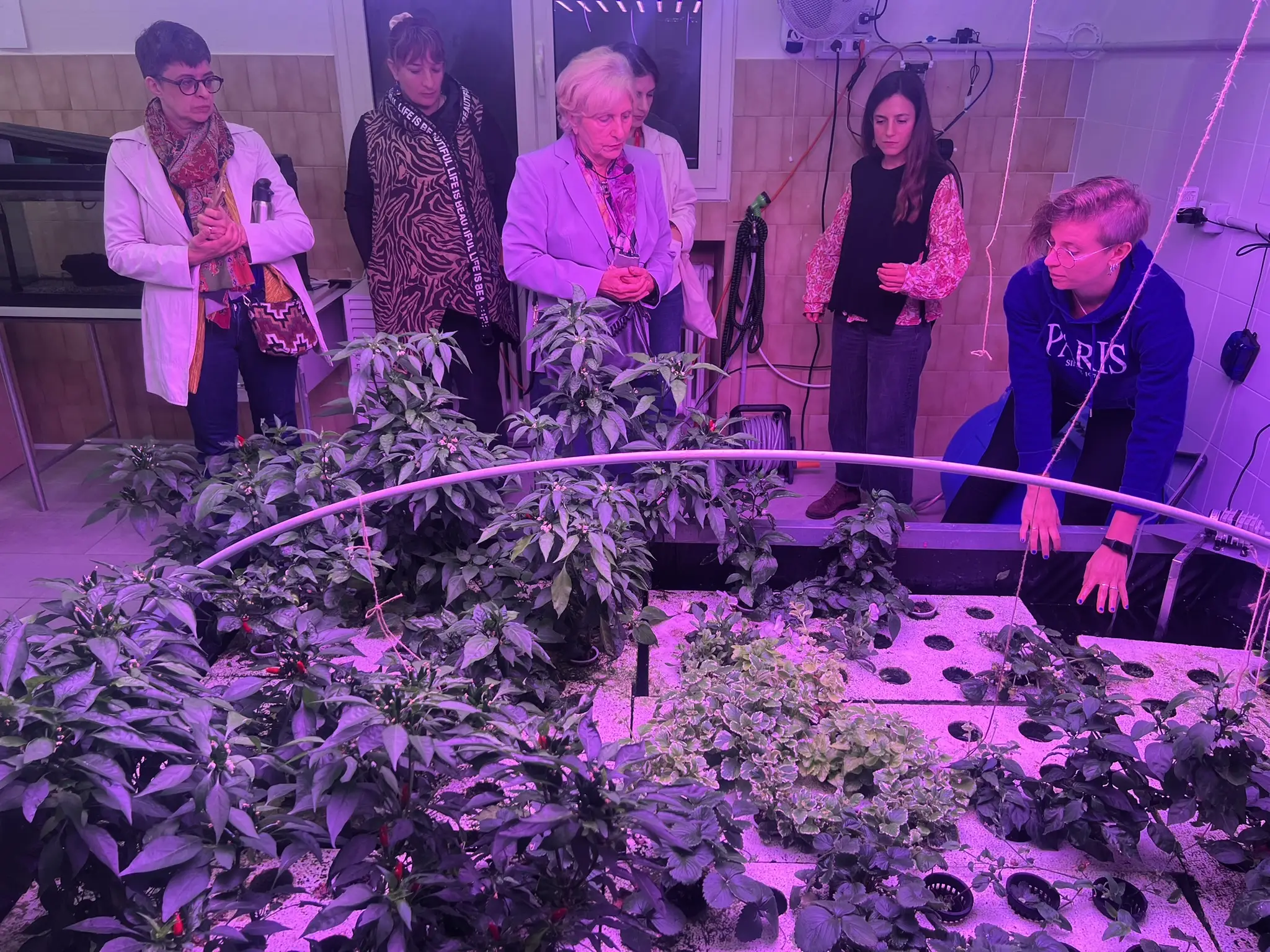
Founded in 1894, the institute combines formal education with a working agricultural enterprise operating on approximately 12 hectares of land. Its farm serves both commercial and educational purposes, enabling students to gain experience across agricultural production, livestock management, machinery operation, experimentation and direct sales.
The institute also introduces students to modern agricultural technologies and sustainable production practices through activities involving aquaponics, precision agriculture, drones, Web GIS applications and biodiversity conservation.
Beyond initial vocational education, Lombriasco provides continuing training for agricultural workers and cooperates with universities, research organisations and other external partners.
The model demonstrates how technical, digital and green competences can be developed together through real agricultural challenges rather than taught as isolated subjects.
For FARMER, one particularly valuable lesson is that curriculum innovation does not always require major investments in new technology. It can begin by reorganising existing teaching activities around real production processes and strengthening cooperation with local agricultural enterprises.
This approach is especially relevant to the development of FARMER’s 30-hour learning modules, which aim to integrate emerging technologies and sustainability into practical vocational education.
ITS Agroalimentare Academy Piemonte: Bringing education closer to industry needs
On the final working day, participants visited ITS Agroalimentare Academy Piemonte, a post-secondary technical academy offering two-year professional programmes tailored to the needs of the agri-food industry.
Its educational approach combines specialised classroom instruction with practical and work-based training, supported by close cooperation with companies and industry professionals.
The Academy’s areas of focus include food innovation, digital technologies, sustainability, production processes and quality management.
Of particular interest to FARMER is the involvement of companies not only in providing internships but also in shaping training programmes around emerging occupational and technological requirements.
This demand-driven model offers a useful reference for strengthening cooperation between VET providers and employers and ensuring that curriculum development reflects real labour-market needs.
From European experience to local solutions
Although the institutions visited represent different educational models, they share an important principle: vocational education becomes more relevant when learning is closely connected to real-world practice.
The Turin programme highlighted several complementary approaches:
- Open Incet demonstrated the value of connecting education with entrepreneurship and innovation ecosystems.
- ETF provided insight into regional skills policies and European cooperation opportunities.
- Bonafous illustrated how shared infrastructure and institutional partnerships can support practical learning.
- Lombriasco showed how agricultural production can become the foundation for competence-based education.
- ITS Agroalimentare Academy Piemonte offered a model for aligning advanced technical training with industry needs.
For FARMER, the objective is not to replicate these models in their entirety, but to identify practices that can be adapted to the resources, priorities and institutional environments of participating schools in Bosnia and Herzegovina and Montenegro.
The learning process will continue through an online follow-up session scheduled for 22 October 2026, when participants will review the insights gained in Turin, identify priorities for their schools and discuss concrete steps towards curriculum adaptation.
These findings will also be considered alongside local stakeholder consultations and ongoing curriculum development activities.
By connecting European experience with local needs, FARMER aims to support more responsive, practice-oriented and future-ready vocational education in the Western Balkans.
Funded by the European Union. Views and opinions expressed are, however, those of the author(s) only and do not necessarily reflect those of the European Union or EACEA. Neither the European Union nor EACEA can be held responsible for them.