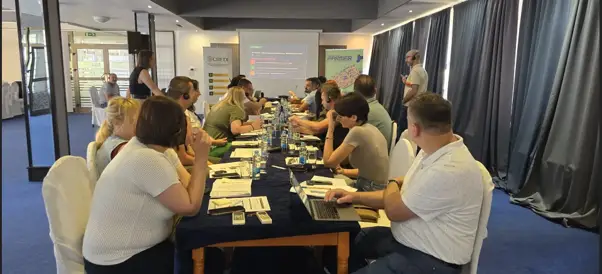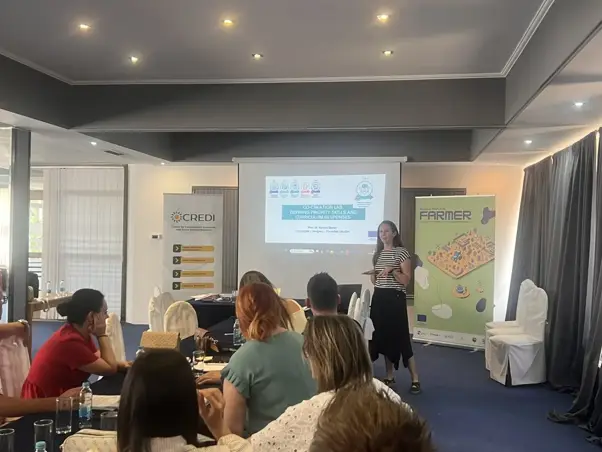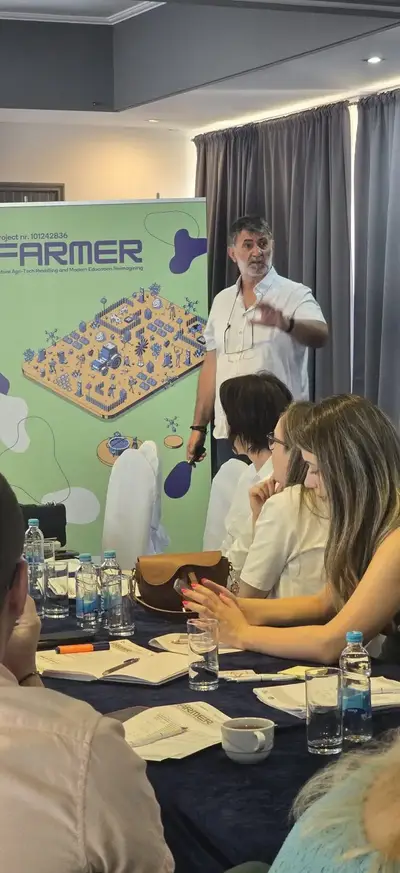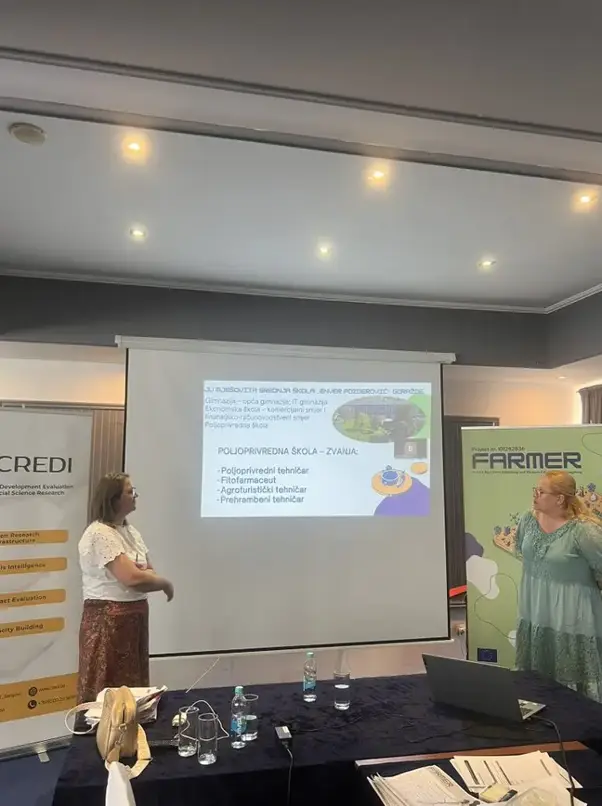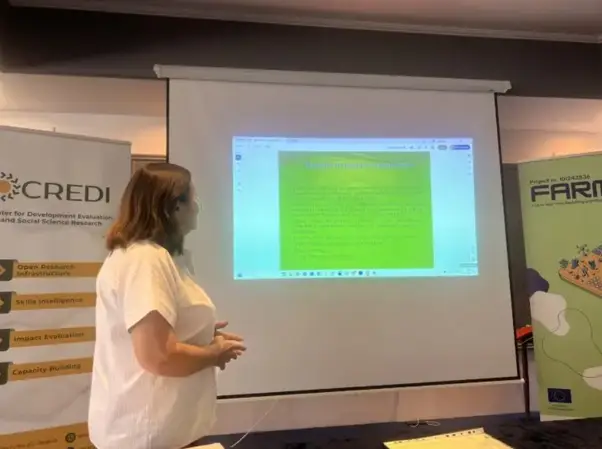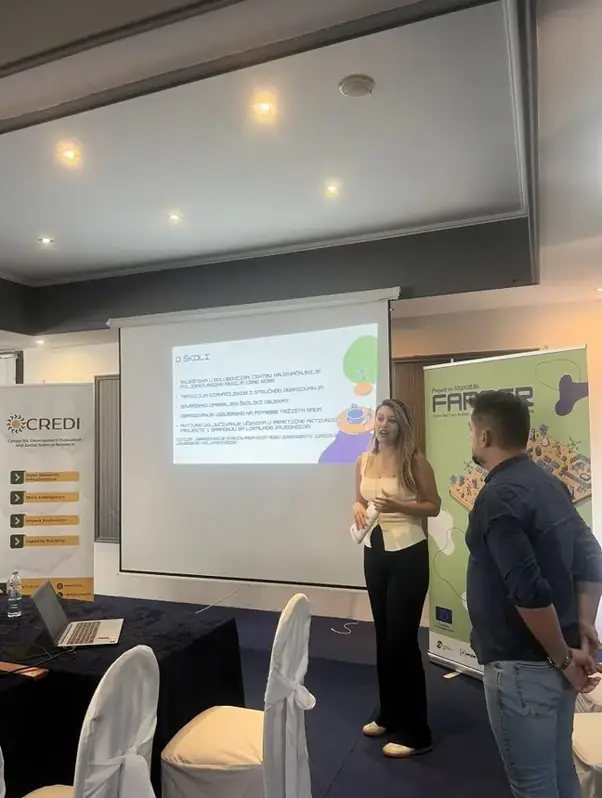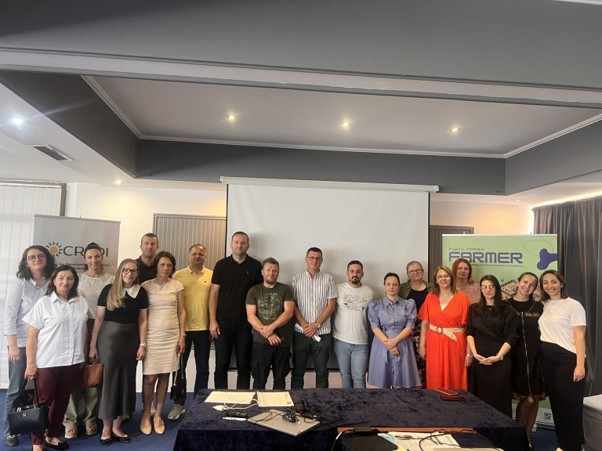
The Erasmus+ project FARMER – Future Agri-Tech Reskilling and Modern Education Reimagining successfully completed the training programme “Designing VET Curricula for Emerging Skills: A Practical Approach to Agri-Tech and Future Farming”, held in Trebinje from 15 to 18 June 2026, with the final online session organised on 26 June 2026.
The training brought together representatives of participating VET schools: JU Mješovita srednja škola “Enver Pozderović” Goražde, JU Centar srednjih škola Trebinje, and JU Srednja mješovita škola Golubovci from Montenegro, together with project partners, experts and practitioners from Bosnia and Herzegovina, Montenegro, Serbia and the EU. Its main objective was to strengthen the capacity of VET providers to adapt curricula to emerging skills needs in the agri-food and agri-tech sectors, with a focus on digitalisation, green transition, smart farming and stronger cooperation with employers and local innovation ecosystems.
The programme was implemented within the FARMER project, funded by the European Union under Erasmus+, which aims to improve the responsiveness of VET systems in the Western Balkans to the growing demand for green and digital skills in the agri-food sector.
The training started with an online preparatory session on 25 May, during which participating schools received guidance for stakeholder consultations and preparatory tasks. These inputs formed the basis for the in-person training in Trebinje, where schools presented their existing programmes, key challenges and first findings from consultations with employers and other local stakeholders.
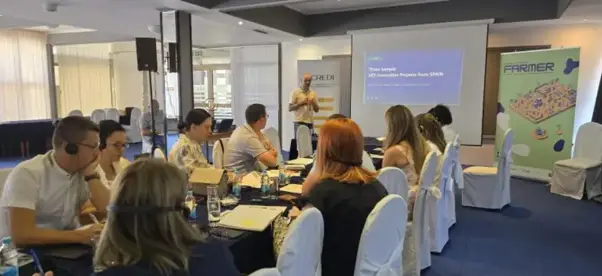
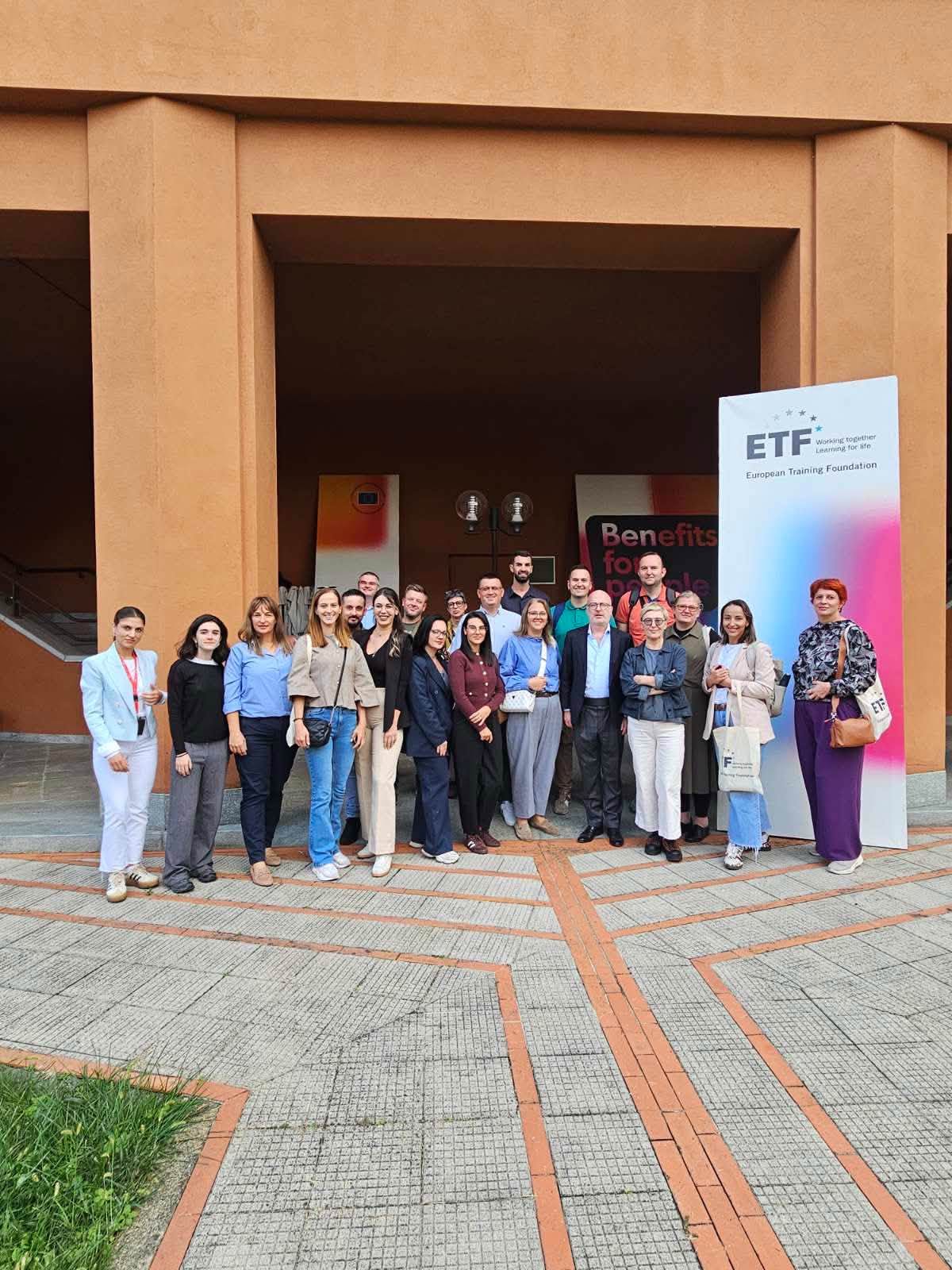
A particularly important part of the programme was the EU-level contribution delivered by Ivan Diego Rodriguez engaged by Fondazione Giacomo Brodolini, the FARMER project coordinator. His sessions introduced participants to a broader understanding of VET innovation, moving beyond the idea of curriculum change as a purely school-based process. Instead, VET innovation was presented as an ecosystem process that connects schools, employers, graduates, local communities, innovation actors and policy frameworks.
Through examples from European practice, participants discussed how vocational schools can use skills intelligence, graduate tracking, alumni relations and employer engagement to make curricula more responsive to real labour-market change. This was one of the most innovative parts of the training, as it showed how evidence from graduates, companies and sector trends can be transformed into concrete changes in teaching, learning outcomes and programme design.
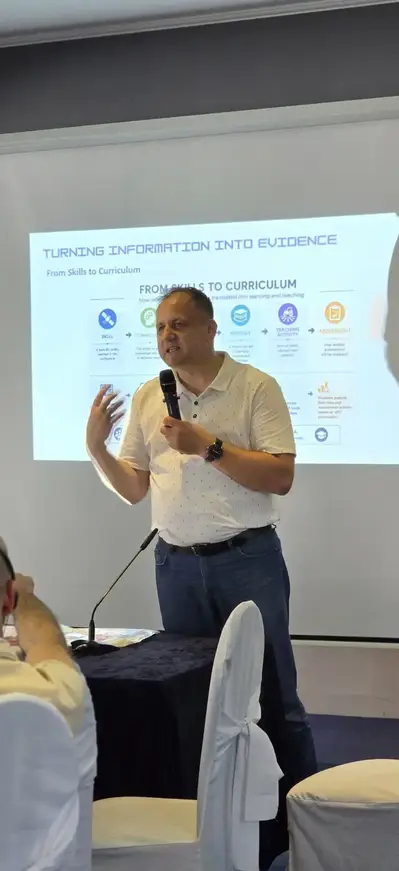
CREDI delivered an important practical session on moving from data to curriculum decisions. Nermin Oruč and Ilma Kurtović guided participants through the question of how VET schools can use skills inputs in curriculum development. The session focused on how information from employers, graduates, labour-market trends, sector experts, teachers and students can be assessed, validated and translated into practical curriculum choices. A key message was that skills intelligence becomes useful only when it helps schools decide what should change, what should remain in the curriculum, and whether new skills require new subjects, new modules, practical activities, teaching materials or stronger work-based learning.
Regional examples helped connect these broader European approaches with the Western Balkan context. Ivica Sivrić from REDAH presented smart agriculture and innovation trends in Herzegovina, including the use of IoT sensors, farm management software, GIS, smart irrigation, drones and other precision agriculture tools. Mirko Jokić, on behalf of Smart Village and EIT Food BiH representative, introduced examples of agri-tech innovation, rural innovation ecosystems and opportunities for stronger links between education, entrepreneurship, research and food-system transformation.
Representatives of the schools from Goražde, Trebinje and Golubovci presented their existing programmes and challenges. Their presentations showed that VET schools already have important practical foundations, including cooperation with farms, companies, local institutions and universities. At the same time, they identified common needs: more practical learning in real working conditions, stronger links with employers, better equipment, more digital content, the use of drones, GPS and smart farming tools, and better integration of sustainability and climate-resilient agriculture into curricula.
The curriculum-focused sessions, led by Prof. Sandra Bjelan from the Department of Pedagogy at Faculty of Philosophy, University of Sarajevo, supported participants in moving from identified skills needs towards concrete curriculum responses. Through practical exercises, schools discussed how missing skills can be translated into subjects, modules, teaching methods and practical activities.
The final online session, held on 26 June 2026, completed the training cycle. During this session, Branka Anđelković from Re:People presented findings on emerging skills in the agri-food sector, showing how climate change, digital technologies, new market standards and demographic pressures are changing the knowledge and competences expected from future agricultural workers. Her presentation highlighted the growing importance of hybrid profiles that combine agricultural knowledge with digital tools, data analysis, sustainability, practical problem-solving and cooperation with employers.
Afterwards, the schools presented the findings gathered through stakeholder consultations and explained how these findings could be integrated into their curricula. The session provided space for feedback, discussion and agreement on the next steps in curriculum development within the FARMER project.
The training produced a strong set of materials, presentations and practical inputs that will support the continuation of FARMER activities, including curriculum development, adaptation of learning resources and further cooperation between schools, employers and project partners. The training materials will also be made available on the Smart Labor website as part of the FARMER project resources.
The Trebinje training confirmed the central idea of FARMER: vocational schools should not only respond to change after it happens but should become active co-creators of future-oriented skills systems. By linking schools with labour-market evidence, agri-tech actors, employers and regional innovation initiatives, the project supports a more practical and responsive model of VET in the agri-food sector.
Funded by the European Union. Views and opinions expressed are however those of the author(s) only and do not necessarily reflect those of the European Union or EACEA. Neither the European Union nor EACEA can be held responsible for them.